
Project Overview
Conducted a rigorous experimental study on the mechanical properties of Fused Filament Fabrication (FFF) 3D-printed PLA components, with a focus on manufacturing optimization. The research established critical relationships between printing parameters and mechanical performance, particularly examining the effects of print orientation and speed (45 mm/s vs 65 mm/s). Key findings revealed significant anisotropic behavior, where print orientation substantially influenced mechanical properties - components printed parallel to the load direction showed markedly different behavior under tension versus compression compared to perpendicularly printed specimens. The study utilized standardized ASTM testing procedures for mechanical characterization, including tensile, compression, impact, and hardness testing. This work was integrated into a broader group study investigating four manufacturing variables, contributing to a deeper understanding of FFF process optimization.
Key Responsibilities:
- Designed ASTM-compliant test specimens using SolidWorks for tensile, compression, and impact testing
- Executed 3D printing operations with controlled parameter variations in speed and orientation
- Managed quality control through specimen dimensional verification and documentation
- Conducted comprehensive mechanical testing following ASTM standards including tensile, compression, impact, and hardness tests
- Analyzed mechanical behavior differences between parallel and perpendicular print orientations
- Evaluated relationships between manufacturing parameters and mechanical properties
- Compared experimental results against standard material properties
- Documented testing procedures, results, and manufacturing deviations
- Developed optimization guidelines for print orientation based on loading conditions
- Formulated recommendations for process improvements and future research methodology
Project Gallery
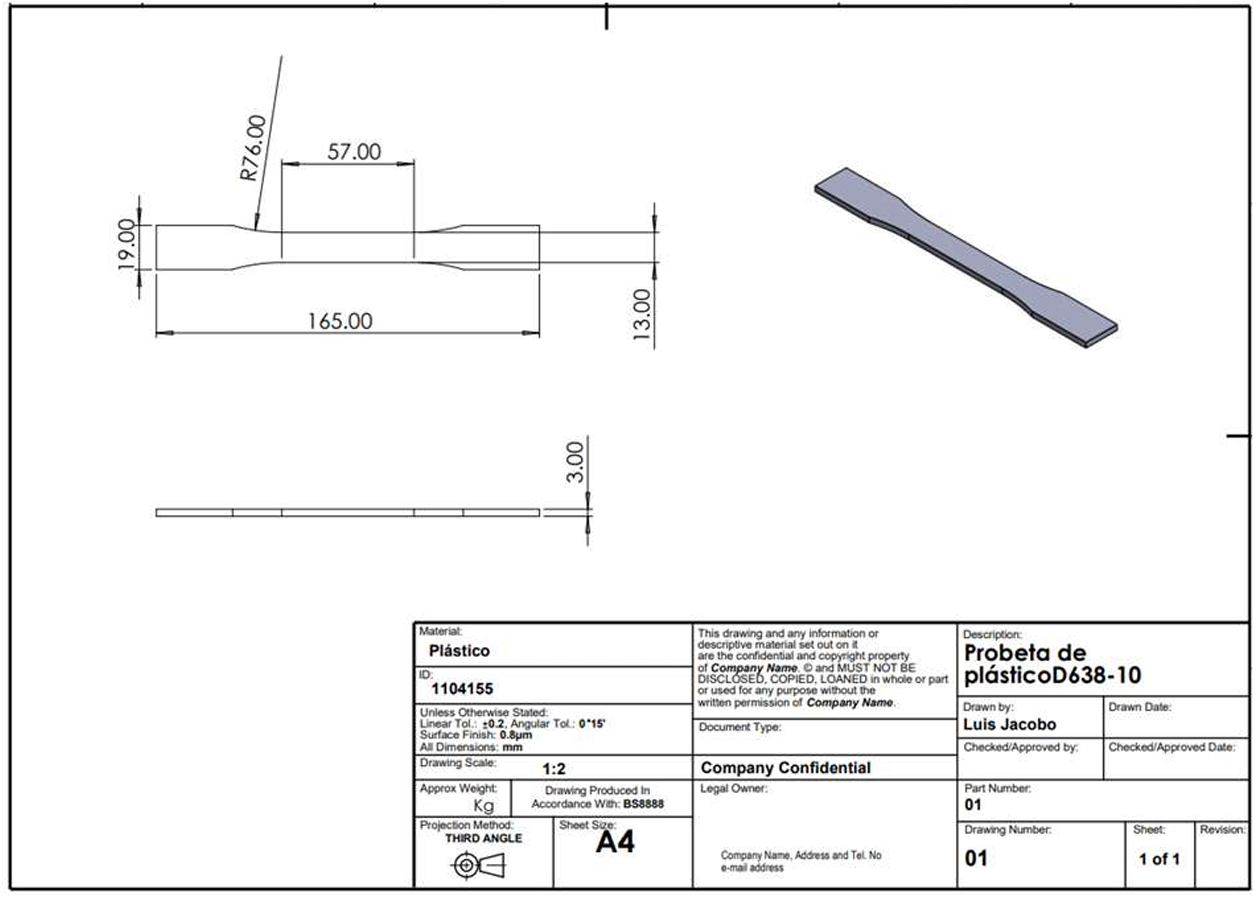
Test Specimen Drawing
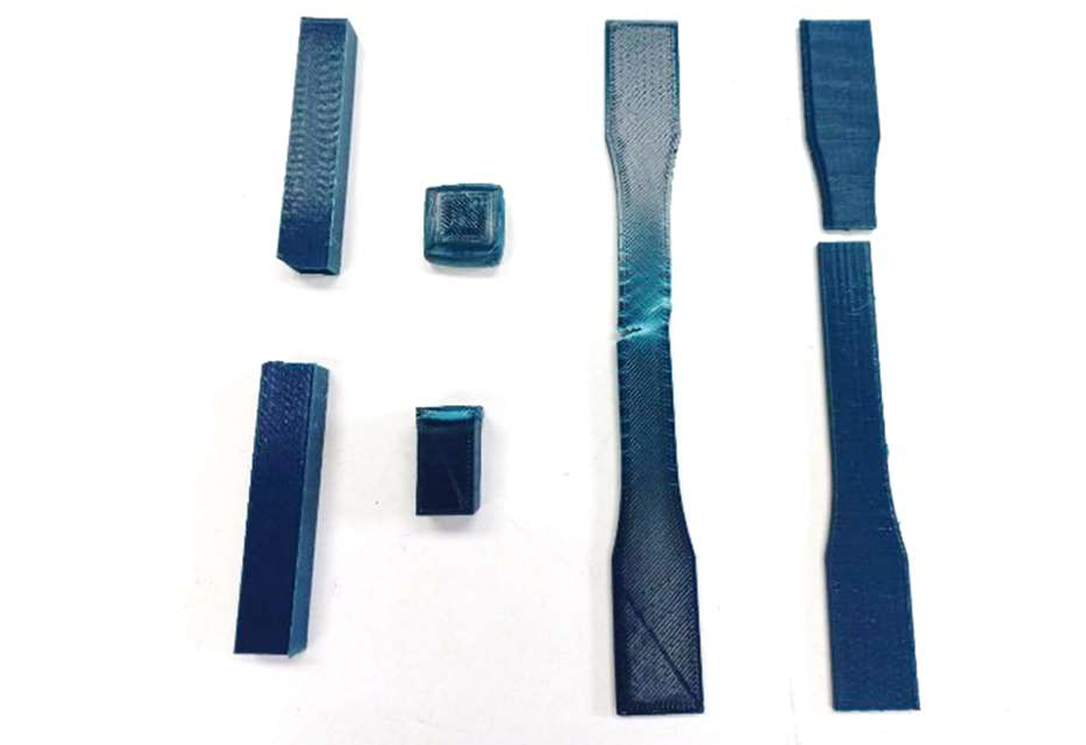
Printed Test Specimens
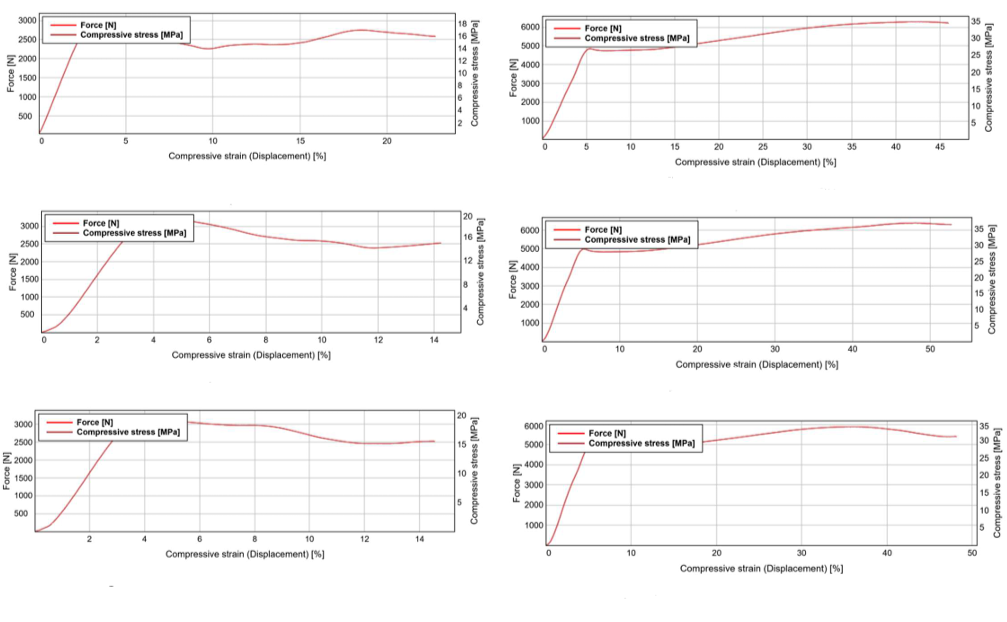
Stress vs Strain Plots